Desk size is one of those decisions people either way overthink or don’t think about at all — and both extremes lead to the same result: a desk that’s either cramped or mostly empty space.
Desk size is the first decision in our gaming setup planning walkthrough.
Start with what has to fit
List out what actually needs desk real estate: monitor(s), keyboard, mouse with room to swing it, and anything else that lives there permanently (speakers, a mic arm base, a laptop stand). Everything else — books, drinks, controllers — can live on a shelf or in a drawer instead of eating into your usable surface.
Width: match it to your monitor setup
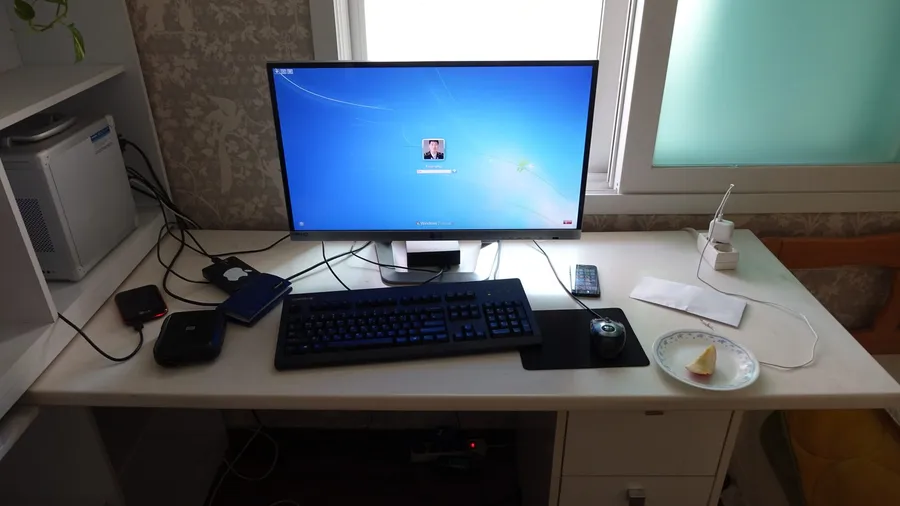
- Single monitor: 100–120cm (40–48in) is comfortable for most setups.
- Dual monitor or a curved ultrawide: 140–160cm (55–63in) gives you room without the monitor edges crowding the desk corners.
- Triple monitor: 180cm+ (70in+), or consider whether an ultrawide would achieve a similar field of view with less desk.
Depth: don’t undersize this one
60–75cm (24–30in) of depth is the sweet spot for most gaming setups — enough for proper monitor distance, a full-size keyboard and mouse mat, and some breathing room, without the monitor being uncomfortably close to your face because the desk is too shallow.
Height: fixed or adjustable
A fixed-height desk at the standard ~73–75cm (29–30in) works fine for most people, but if you’re notably taller or shorter than average, or you switch between sitting and standing, a height-adjustable desk removes the guesswork — pair it with our ergonomics guide to dial in the right eye-level height for your monitor.
Measure your room before you measure the desk
The most common mistake isn’t picking the wrong desk size — it’s not accounting for door swing, walking space behind the chair, or a window/vent the desk would block. Measure the actual floor space with those constraints in mind before shopping by desk dimensions alone.
When in doubt, go slightly smaller
A desk that’s a little tight on width is annoying. A desk that dominates a small room and blocks a door is worse. If you’re between two sizes, the smaller one is usually the safer call — especially paired with good cable management, which recovers more usable space than most people expect.